イベント - 東京カレッジ - Page 7
東京カレッジ

EVENT

Tokyo College aims to generate new knowledge to contribute to the creation of an inclusive society and spark deeper public engagement with the University. You can see the various events in calendar format on this page.

Upcoming Events

On the Uses of the Concept of Transition (Lecture by Prof. Catherine VILLARD)

イベント予定講演会/Lecture

Wednesday, March 25, 2026, 14:00-15:00 JST

The concept of transition, derived from the Latin transire, meaning “to change state,” has been employed across a wide range of fields since the nineteenth century. In contemporary discourse, it is most often associated with climate change and the notion of an “energy transition.” This lecture introduces the concept of power transition – understood as energy flow over time – to account for the rapid acceleration of eco-social change since the mid-twentieth century. It examines the unprecedented challenge of voluntarily moving away from highly powerful fossil fuels. Moving beyond purely techno-solutionist approaches, the seminar emphasizes the central role of social and human innovation. Adapting to renewable and fluctuating energy sources will require a profound rethinking of lifestyles, drawing inspiration from the long-term resilience of living organisms.

Feedback Everywhere (Lecture by Prof. LYGEROS)

イベント予定講演会/Lecture

Thursday, April 2, 2026, 14:00-15:00 JST

What do self-driving cars, power grids, and homeostasis in biology have in common? Seemingly not much. If one looks “under the hood”, however, one discovers that they all rely on a common principle that renders their operation robust and reliable – feedback. The principle of feedback is intuitive: see where you are, compare this to where you want to be, and move in the direction that reduces the difference between the two. Though the principle itself is simple to explain, understanding its implications, uses and limitations is anything but and forms part of a branch of engineering known as automatic control. The talk will outline the main ideas of feedback, automation and control driven by examples of their use in biology, energy systems and beyond.

Elements of a Catastrophe (Lecture by Prof. SO)

イベント予定講演会/Lecture

Wednesday, April 8, 2026, 14:00-15:15 JST

For over five decades, reconnaissance groups around the world have visited earthquake-affected areas. The premise is to learn key lessons to help communities worldwide understand their earthquake risk and take actions to improve their resilience.
In this talk, Professor Emily SO will describe the importance of evidence-based research and set out the key challenges of surveying post-disaster. She will provide a critique on what academic value data from the field brings to reducing the consequences of earthquakes and other natural perils.

New Worlds in Our Galaxy (Lecture by Prof. TINETTI)

イベント予定講演会/Lecture

Thursday, April 16, 2026, 14:00-15:00 JST

The Earth is special to us: it’s our home. But is it really special as a planet? Every star we can see in the night sky is likely to be orbited by planets. More than 6000 (exo)planets have been discovered in the past thirty years.
Finding out why are these new worlds as they are and what is the Earth’s place in our galaxy and –ultimately– in the universe, is one of the key challenges of modern astrophysics.


Event Reports

Collaborations in Language: from Documentation to Resurgence (Lecture by Prof. Mark TURIN)

イベント予定講演会/Lecture

Friday, 4 April, 13:00–14:30 JST

In this richly-illustrated lecture, I discuss two collaborative partnerships in which I have been involved with historically marginalized, Indigenous communities in both the Himalayan region and in Native North America who are working to preserve and revitalize their languages. Through the presentation, I explore these three words: Collect, Protect, Connect.

Economic Policies under Japan’s New Cabinet: Wish List and Prospects

イベント予定パネルディスカッション/Panel discussion共催/Joint Event

Friday, 8 November 2024 8:00 - 9:15 JST

Japan had two elections—LDP President (September 27) and House of Representatives (October 27)—that elected a new prime minister. During the two elections, many economic policy proposals were presented and debated. The webinar will discuss economic policies that are likely to be adopted and those that are unlikely to be adopted but desirable for the Japanese economy.

Towards Building Multicultural and Multilingual Safe Large Language Models

イベント予定講演会/Lecture

Monday, 11 November 2024, 10:00-11:00 JST

As generative AI becomes more widely used, it is crucial for AI models to accurately reflect cultural and linguistic risks in different regions. Identifying harmful content specific to each culture must be continuously updated. This requires collaboration between AI researchers, social scientists, policymakers, and practitioners to form a global community for ongoing discussions. This event will discuss frameworks to sustain such communities, welcoming those interested in AI safety and governance.

Event Calendar

Previous Events

You can search by keywords such as speakers and lecture themes.

Thinking through Permafrost (Lecture by Prof. Sabine DULLIN)

イベント予定講演会/Lecture

Tuesday, 14 May, 2024, 16:30-18:00 JST

In this lecture, Prof. Dullin will discuss how Permafrost was invented as a scientific issue, while also being a natural and meaningful ground for the native communities living on it. Then, she will show how Permafrost took, at the turn of the 21st century, a political meaning in the search for sovereignty in different Arctic substates, such as Yakutia.

What is a Global Historian’s Archive? (Lecture by Prof. Martin DUSINBERRE)

イベント予定講演会/Lecture

Friday, 10 May 2024, 10:30-12:00 JST

This lecture follows the Yamashiro-maru steamship across Asian and Pacific waters, innovatively reconstructing the lives of migrants who left Japan for work in Hawai'i, Southeast Asia and Australia in the late-nineteenth century. These stories bring together transpacific historiographies of settler colonialism, labour history and resource extraction in new ways. Drawing on an unconventional and deeply material archive, the lecture addresses key questions of method and authorial positionality in the writing of global history.

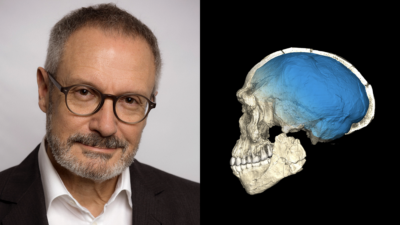
The Origin and Rise of Homo sapiens (Lecture by Prof. Jean-Jacques HUBLIN)

イベント予定講演会/Lecture

Thursday, 9 May 2024, 2:00-3:30 pm

The landscape of human evolution is marked by the diversification of archaic lineages, with various African populations having shaped the emergence of "modern" forms of Homo sapiens. Though "Green Sahara" climatic phases facilitated the migration of African populations, the expansion of Homo sapiens had little connection to environmental factors. This expansion saw the replacement of local populations and profound cultural transformations, ultimately resulting in the spread of a singular human species that continues to shape our environment today.

Conscience and Complexity (Lecture by Prof. Alexander R. GALLOWAY)

イベント予定講演会/Lecture

Tuesday, 7 May 2024, 10:00-11:00 am JST

Complexity questions the duality of existence, favoring multiplicity over singularity. In philosophy, Leibniz and Deleuze explored this intricacy. Mathematicians like Cantor, Gödel, and Turing delineated the boundaries of rationality. Freud and Lacan proposed the psyche's autonomy and symbolic realm. This ongoing discourse reaffirms metaphysics' relevance in contemporary thought, highlighting a preference for complexity.

Bringing Dark Heritage to Light: Monuments to Wartime Foreign Laborers in Japan (Lecture by Prof. Andrew GORDON)

イベント予定講演会/Lecture

Friday, 26 April 2024, 14:00-15:30 JST

Monuments mourning the deaths of wartime foreign laborers bring to mind two meanings of the term “dark” in relation to heritage: the commemoration of tragic episodes in history and the importance of little known, nearly hidden monuments to this history. What messages are conveyed at these doubly dark locations?

Fortifying Digital Frontiers: Navigating the Cybersecurity Journey of Saudi Arabia (Lecture by Prof. Muhammad KHURRAM KHAN)

イベント予定共催/Joint Event講演会/Lecture

Wednesday, 24 April 2024, 15:30-17:00 JST

This lecture explores Saudi Arabia’s dedication to strengthening its ICT infrastructure to protect businesses and individuals from cyber threats. The discussion includes the Kingdom’s initiatives to reassess its cybersecurity capabilities, its investments in a vision of a digitally secure economy, and a strategic framework to position itself as not only a regional leader but also a global pioneer in collective cybersecurity.

The Question of Despotism in the Reception of Montesquieu’s De l’Esprit des lois in Japan and China (Lecture by Prof. Anne CHENG)

イベント予定共催/Joint Event講演会/Lecture

Thursday, 18 April 2024, 14:00-16:00 JST

One of the most famous quotes from Montesquieu’s De l’Esprit des lois is: “China is thus a despotic state of which the principle is fear”. Before jumping to hasty conclusions driven by the present context, I suggest that we should start with delving into the history of the reception of Montesquieu’s thought and most famous work first in Meiji Japan, and then in late imperial China.

Why the Destruction of Property Rights is Necessary (Lecture by Prof. Frank UPHAM)

イベント予定講演会/Lecture

Monday, 15 April 2024, 17:00-18:30 JST

The World Bank, the American government, and virtually all scholars agree that “Property rights are at the heart of the incentive structure of market economies” and that a “free and robust market can thrive only where property rights are accorded respect.” Drawing on empirical reality, I argue the reverse: that property rights must be destroyed for rapid economic growth and to realize the social benefits that growth can provide.

International Trends in AI Safety and Governance

イベント予定パネルディスカッション/Panel discussion

Thursday, 28 March 2024, 10:00-12:00 JST

In this event, we will host discussions with experts on overseas AI governance to delve into the trends in international AI safety and governance.

Gandhi and the Regime of (Human) Rights (Lecture by Prof. Vinay LAL)

イベント予定講演会/Lecture

Monday, 25 March 2024, 05:30-7:00 pm JST

This talk traces the evolution of the idea of "rights" in the West and the notion of rights-talk, and then discusses Gandhi's thinking on rights, his philosophical, ethical, and political reservations about the idea of rights, and his anticipation of the Anthropocene.

International Women’s Day Event: A Conversation with Akutagawa Prize-winning Author MURATA Sayaka

イベント予定対話/Dialogue講演会/Lecture

Monday, 18 March 2024, 17:00-18:30 JST

To celebrate International Women’s Day this March, Tokyo College’s “Gender, Sexuality & Identity” collaborative research group will host a special webinar event with MURATA Sayaka, author and winner of the 155th Akutagawa Prize for her novel ”Convenience Store Woman” (2016). Through discussing Murata’s writing, experiences, and inspirations, the event hopes to generate reflection on society’s gender and sexuality “norms” and how they shape our world.


TOP