イベント - 東京カレッジ - Page 28
東京カレッジ

EVENT

Tokyo College aims to generate new knowledge to contribute to the creation of an inclusive society and spark deeper public engagement with the University. You can see the various events in calendar format on this page.

Upcoming Events

【Rescheduled】Changing the Urban Food Environment to Reduce Risk of Chronic Disease (Lecture by Prof. Joel GITTELSOHN)

イベント予定講演会/Lecture

Tuesday, February 10, 2026, 13:30–14:30 JST

This presentation will describe environmental interventions to prevent obesity and non-communicable diseases in urban food environments. Dr. Gittelsohn will highlight strategies, impacts and lessons learned from the Baltimore Healthy Food initiatives, as well as the work of other researchers. Evidence shows that combining educational, environmental, and policy approaches improves access to and consumption of healthier foods, though impacts on obesity remain modest. His current work explores digital tools, restaurant and systems science approaches. Findings underscore the need for sustainable, community-engaged strategies to strengthen food environments and reduce chronic disease risk.

Changing Wildfires – How the World Needs to Adapt to Living with Fires (Lecture by Prof. Thomas ELMQVIST)

イベント予定講演会/Lecture

Wednesday, February 18, 2026, 15:30-16:30 JST

Wildfires are becoming more frequent and intense, even in historically less affected regions. This talk examines the drivers, consequences, and management of changing wildfire dynamics. A more flammable landscape—shaped by climate change, land abandonment, and afforestation—is intensifying fire regimes globally. While most of the 780 million hectares that burn annually are low-intensity savanna fires, high-intensity, destructive wildfires are increasing. Fire is an ancient ecological process with both benefits and harms, shaping ecosystems yet threatening lives and property. As suppression alone is insufficient, I advocate proactive adaptation through prevention, restoration, land-use planning, coordination, and improved fire literacy.
Event Reports

Collaborations in Language: from Documentation to Resurgence (Lecture by Prof. Mark TURIN)

イベント予定講演会/Lecture

Friday, 4 April, 13:00–14:30 JST

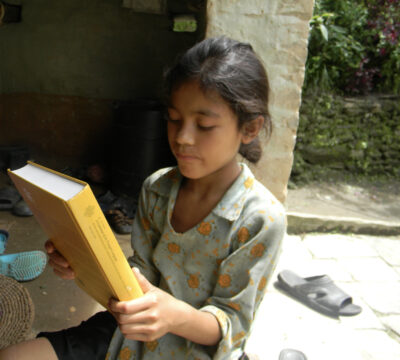
In this richly-illustrated lecture, I discuss two collaborative partnerships in which I have been involved with historically marginalized, Indigenous communities in both the Himalayan region and in Native North America who are working to preserve and revitalize their languages. Through the presentation, I explore these three words: Collect, Protect, Connect.

Economic Policies under Japan’s New Cabinet: Wish List and Prospects

イベント予定パネルディスカッション/Panel discussion共催/Joint Event

Friday, 8 November 2024 8:00 - 9:15 JST

Japan had two elections—LDP President (September 27) and House of Representatives (October 27)—that elected a new prime minister. During the two elections, many economic policy proposals were presented and debated. The webinar will discuss economic policies that are likely to be adopted and those that are unlikely to be adopted but desirable for the Japanese economy.

Towards Building Multicultural and Multilingual Safe Large Language Models

イベント予定講演会/Lecture

Monday, 11 November 2024, 10:00-11:00 JST

As generative AI becomes more widely used, it is crucial for AI models to accurately reflect cultural and linguistic risks in different regions. Identifying harmful content specific to each culture must be continuously updated. This requires collaboration between AI researchers, social scientists, policymakers, and practitioners to form a global community for ongoing discussions. This event will discuss frameworks to sustain such communities, welcoming those interested in AI safety and governance.

Event Calendar

On Wednesday, June 26, Tokyo College held an online symposium on the theme of “Economics,” the fourth in the “Beyond Corona Crisis.”

This event was moderated by Professor Takeo Hoshi (Graduate School of Economics, and Tokyo College), with the following speakers: macroeconomics and finance specialist Professor Tsutomu Watanabe (Dean of the Graduate School of Economics); public economics and macroeconomics expert Professor Yasushi Iwamoto (Graduate School of Economics); development, spatial, and labor economist Associate Professor Keisuke Kawata (Institute of Social Science, and Graduate School of Economics Center for Research and Education in Program Education (CREPE)); and finance expert Associate Professor Daisuke Miyakawa (Hitotsubashi University, and CREPE).

The first half of the symposium saw an exchange of views on how the coronavirus crisis has affected the global economy. Professor Watanabe focused on people’s consumption behaviors, and Associate Professor Miyakawa on changes to business exit mechanisms. Associate Professor Kawata then discussed the impact of the coronavirus crisis on the labor market, and Professor Iwamoto finished by examining the trade-off between overall economic activity and life. In the latter half of the symposium, there was a discussion of urgent issues and challenges faced by economic systems revealed by the coronavirus crisis. Concrete examples were introduced to demonstrate that there are various perspectives even within the field of economics, and that people’s understanding of the crisis and the measures they adopt to face it depends on the data they pay attention to.


Previous Events

You can search by keywords such as speakers and lecture themes.


TOP