イベント - 東京カレッジ
東京カレッジ

EVENT

Tokyo College aims to generate new knowledge to contribute to the creation of an inclusive society and spark deeper public engagement with the University. You can see the various events in calendar format on this page.

Upcoming Events

Many Lives of a British Diplomat (Lecture by Mr. Alastair MORGAN)

イベント予定講演会/Lecture

Wednesday, December 10, 2025, 15:00-16:00 JST (14:30 Open)

In this interview, Tokyo College Ushioda Fellow Alastair Morgan will share with the audience some fascinating insights on three decades as a British diplomat. Retired in 2019, Alastair Morgan spent his diplomatic postings in Asia, namely Tokyo, Beijing, Guangzhou, and Pyongyang. What was his life like as a British diplomat? What were the challenges he faced in his various postings? How does a diplomat balance the needs of a local posting with the needs of Whitehall? This will be a unique opportunity to gain insight through Alastair Morgan’s reflections on his life as a British civil servant and diplomat in Asia from the 1980s onwards.

Brussels Effect 6 : The Reach of AI Transparency Obligations Beyond Corporations

イベント予定パネルディスカッション/Panel discussion講演会/Lecture

Tuesday, 6 January 2026, 14:00-15:00 JST

This webinar provides a clear and accessible overview of the EU AI Act’s Article 50 transparency obligations, which require users to be able to recognize when text, images, video, or audio have been generated or edited by AI. We will explain key requirements—such as disclosure of AI chatbot interactions, watermarking or metadata for synthetic content, notices on emotion recognition and biometric categorization systems, and deepfake labeling—highlighting their practical relevance in the generative AI era. Crucially, these duties apply not only to AI “providers” but also to “deployers” who integrate AI into services or content offered in the EU, and may extend to professionals and individual creators using AI commercially, while purely private hobby use is excluded. We will also cover the ongoing development of a Transparency Code of Practice (CoP) in the EU, its expected role as a de facto compliance benchmark, and the issues that may arise for organizations choosing alternative approaches. This session is especially for those who have assumed the rules do not concern them, offering a chance to understand the true reach of Article 50 and consider appropriate preparation.

Does Progress Begin with Destruction? — A Dialogue Between a Physicist and an Economist

イベント予定対話/Dialogue

Wednesday, January 7, 2026, 14:00-15:00 JST

In economics, there is a well-known idea that new technologies and ideas replace older ones, driving progress. This concept, known as "creative destruction," was a central theme in the 2025 Nobel Prize in Economics. In contrast, physics teaches us the principle of conservation: nothing is lost, everything simply changes form. So, is economic progress truly about destruction—or is it more about transformation? In this lecture, a physicist and an economist will explore the differences between these perspectives, and discuss topics such as sustainable growth and the power of human imagination, in a way that is accessible to all.

Event Reports

Collaborations in Language: from Documentation to Resurgence (Lecture by Prof. Mark TURIN)

イベント予定講演会/Lecture

Friday, 4 April, 13:00–14:30 JST

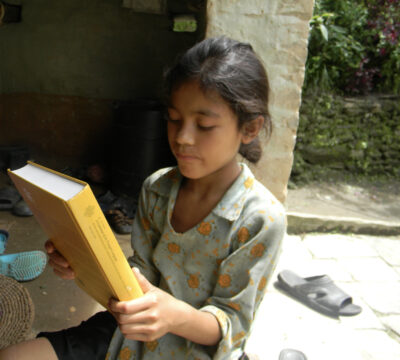
In this richly-illustrated lecture, I discuss two collaborative partnerships in which I have been involved with historically marginalized, Indigenous communities in both the Himalayan region and in Native North America who are working to preserve and revitalize their languages. Through the presentation, I explore these three words: Collect, Protect, Connect.

Economic Policies under Japan’s New Cabinet: Wish List and Prospects

イベント予定パネルディスカッション/Panel discussion共催/Joint Event

Friday, 8 November 2024 8:00 - 9:15 JST

Japan had two elections—LDP President (September 27) and House of Representatives (October 27)—that elected a new prime minister. During the two elections, many economic policy proposals were presented and debated. The webinar will discuss economic policies that are likely to be adopted and those that are unlikely to be adopted but desirable for the Japanese economy.

Towards Building Multicultural and Multilingual Safe Large Language Models

イベント予定講演会/Lecture

Monday, 11 November 2024, 10:00-11:00 JST

As generative AI becomes more widely used, it is crucial for AI models to accurately reflect cultural and linguistic risks in different regions. Identifying harmful content specific to each culture must be continuously updated. This requires collaboration between AI researchers, social scientists, policymakers, and practitioners to form a global community for ongoing discussions. This event will discuss frameworks to sustain such communities, welcoming those interested in AI safety and governance.

Event Calendar

Previous Events

You can search by keywords such as speakers and lecture themes.

The Sado Gold Mine World Heritage Site: Possibilities for Addressing Contested History (Lecture by Prof. Andrew GORDON)

イベント予定講演会/Lecture

Wednesday, December 3, 2025, 15:00-16:00 JST

In 2024 the UNESCO World Heritage Committee listed the gold mines on Sado island as world heritage sites with significantly less controversy than in 2015, when the cluster of Meiji Era Industrial Revolution sites, mainly in Kyushu, were listed. At issue in both cases was the way these industrial heritage sites would describe the treatment of wartime foreign laborers, Koreans in particular, who were brought to Japan and forced to work against their will. The Sado case generated less controversy mainly because the Japanese side offered a fuller and more honest account. In this presentation I explore the reasons for this difference with particular attention to the role of local civil society actors.

Building Trust through AI Governance and Transparency: Learning from the Hiroshima AI Process

イベント予定対話/Dialogue講演会/Lecture

Thursday, November 27, 2025, 16:00–18:00

As AI becomes increasingly integrated into society, ensuring transparency and trustworthy governance has become a key global issue. This event provides a practical introduction to preparing AI transparency reports, using the Transparency Report Handbook for AI Governance developed by the University of Tokyo’s Ema Laboratory. Participants will learn effective methods for organizing internal information, facilitating consensus, and conducting governance processes. The program also features the Hiroshima AI Process (HAIP) as an international case study of voluntary transparency reporting, and includes a session for participants to exchange insights on embedding AI governance and building global trust.

MIT’s Research, Education, and Entrepreneurship Ecosystem (Lecture by Prof. Gang CHEN)

講演会/Lecture

Wednesday, 12 November 15:30-16:30

MIT is a world-leading university that not only produces breakthrough fundamental research but has also spawned over 30,000 active companies—together representing the world’s tenth-largest economy. MIT has likewise pioneered numerous influential educational initiatives. In this talk, the speaker will share personal observations on MIT’s research, education, and entrepreneurship ecosystem.

“Morale” on the Home Front: Its Transnational Construction and Destruction, 1914-1945 (Lecture by Prof. Sheldon GARON)

イベント予定講演会/Lecture

Wednesday, October 22, 2025, 15:00–16:00 JST

Although few could define it, “civilian morale” emerged as one of the 20th century’s deadliest discourses. In its name, millions of civilians were bombed and starved, as warring nations sought to “break the morale” of the enemy's civil population in Europe and East Asia by air raids and food blockades. How did it become “normal” to win wars by attacking cities and civilian morale? From World War I through World War II, ideas and practices relating to morale circulated rapidly around the world. Key transnational developments include the British and German blockades of 1914-18, the rise of “morale reports,” aerial bombardment, and America’s “Operation Starvation” against Japan.

Nefertiti: The Making of a Global Icon (Lecture by Prof. Sebastian CONRAD)

講演会/Lecture

Wednesday, 15 October 2025, 15:00-16:00

The talk will address the astonishing global resonance of the bust of Nefertiti ever since its first exhibition in Berlin in 1924. Today, the silhouette alone guarantees recognition around the world. This is a story of how a variety of actors have used the bust for the most diverse purposes – for cosmetic ads; as the first feminist in world history; by die-hard National Socialists; by nationalists in Egypt and Bengal; by African American celebrities, and so forth. How has one object been able to achieve such global resonance? To whom does the bust rightfully belong – and who can control the narratives around it?

【Cancellation】Changing the Urban Food Environment to Reduce Risk of Chronic Disease (Lecture by Prof. Joel GITTELSOHN)

イベント予定講演会/Lecture

Wednesday, October 8, 2025, 15:00–16:00 JST

This presentation will describe environmental interventions to prevent obesity and non-communicable diseases in urban food environments. Dr. Gittelsohn will highlight strategies, impacts and lessons learned from the Baltimore Healthy Food initiatives, as well as the work of other researchers. Evidence shows that combining educational, environmental, and policy approaches improves access to and consumption of healthier foods, though impacts on obesity remain modest. His current work explores digital tools, restaurant and systems science approaches. Findings underscore the need for sustainable, community-engaged strategies to strengthen food environments and reduce chronic disease risk.

Macroeconomic Policy Prescriptions for the Japanese Economy (Lecture by Prof. KIYOTAKI Nobuhiro)

イベント予定講演会/Lecture

Wednesday, 27 August, 15:00–16:00 JST

Japan’s economy is currently facing a variety of challenges, including the impact of Trump-era tariffs, rising food prices, a rapidly aging and declining population, and growing concerns over fiscal and environmental sustainability. In this lecture, we are pleased to welcome Prof. Kiyotaki Nobuhiro, a world-renowned macroeconomist, and Ms. Nakazora Mana, an economist working at the forefront of global financial markets. Together with the audience, we will explore Japan’s current economic challenges and consider possible solutions from a macroeconomic policy perspective. This event is open to a wide audience, especially those with an interest in macroeconomics and policy design. We warmly welcome your participation and questions.

Coffee, Sustainability and Climate Change (Lecture by Prof. Catherine TUCKER)

イベント予定講演会/Lecture

Wednesday, 30 July, 15:00–16:30 JST

Coffee is one of the world’s most popular beverages, associated with sociality, alertness, and productivity. Over time, coffee production has contributed to environmental degradation, rural poverty, and societal inequities. Currently, its production is threatened by climate change, market volatility and economic uncertainties. Drawing on longitudinal research with coffee producers in Central America, this talk will examine coffee producers’ efforts to improve their coffee quality, socioeconomic well-being, and environmental sustainability in contexts of extreme weather events and myriad insecurities. The discussion also will consider consumer roles, the impacts of certifications, and approaches for supporting climate resilient coffee production.

What is the Hiroshima AI Process (HAIP) Reporting Framework? – Japan’s cutting-edge global AI governance initiative

イベント予定パネルディスカッション/Panel discussion講演会/Lecture

Monday, 28 July 2025, 14:00-15:30 JST

The Hiroshima AI Process (HAIP), launched at the G7 Hiroshima Summit, is a global framework promoting transparency in AI development and usage. Under the leadership of the OECD Secretariat, a reporting framework to advance transparency for trustworthy AI began in 2025.
This webinar introduces HAIP and explores its significance. Panelists from companies that have submitted reports to HAIP will discuss why they joined, best practices for transparency and disclosure, and expectations regarding Japan's new AI Promotion Act, which explicitly aligns with HAIP. As such, this session will be valuable not only for technical and legal teams at global companies working with foundation models, generative AI, or AI agents, but also for Japanese companies operating solely within Japan, including SMEs and startups.

A Sensory Theory of Environmental Justice (Lecture by Prof. Mukul SHARMA)

イベント予定講演会/Lecture

Wednesday, 23 July, 15:00–16:30 JST

Human senses—sight, hearing, smell, taste, and touch—shape how we perceive and interact with the world, influencing environmental experiences and cultural practices. Yet sensory politics—the social organization of touch, smell, and taste—often reinforces hierarchies, marginalizing certain groups as environmental ‘others.’ This lecture examines the ‘environmentality’ of the senses, focusing on their role in perpetuating inequalities within discriminatory social structures. By interrogating how sensory norms sustain injustice, I argue for a new environmental justice vocabulary—one that integrates sensory and social dimensions to address the entangled relationships between environment, power, and lived experience in caste-based societies.


TOP